
Reducing-balance EMI, not a prepay button
Standard PMT on reducing balance. Defaults: ₹10 lakh, 8.5%, 15 years. EMI about ₹9,847. Year 1 is about ₹83,700 interest and ₹34,500 principal. Year 15 is the reverse. Extra rupees early buy more interest avoided.
There is no bank part-prepayment rule here. Shorten tenure or cut principal and compare total interest. Same extra rupees versus an SIP: prepay vs SIP.
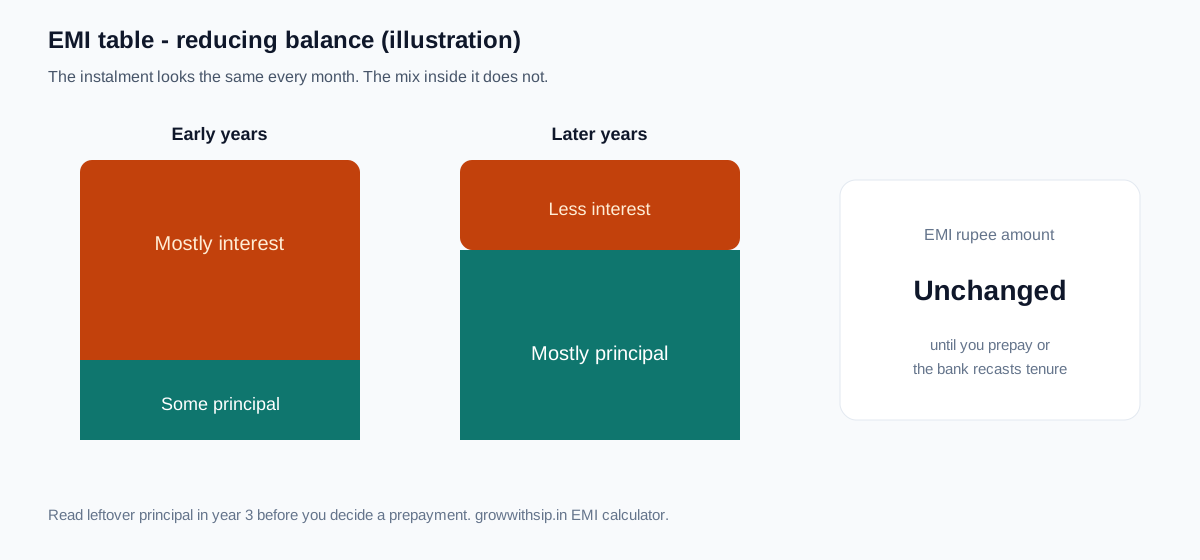

Interest is front-loaded
Motion is the same maths as the worksheet. Reduced-motion browsers skip the grow.
Calculator education
When to use this calculator
Use this page to see the monthly instalment implied by a loan amount, annual rate, and tenure on a reducing-balance schedule — home, car, or personal, as long as you type realistic inputs.
How to read your result
EMI is the constant monthly payment from the standard PMT formula. Principal is what you borrowed. Total interest is all EMIs minus principal. Total repayment is principal plus interest.
Early years are interest-heavy. The yearly table shows that mix; it is not a sanction letter.
Key assumptions and limitations
- Reducing-balance interest, monthly rest, no rate reset mid-tenure unless you change the slider.
- Processing fees, GST, insurance, and foreclosure charges are not in this page’s main EMI (they are on the personal-loan page where modelled).
- Prepayment is not a button here; shorten tenure or cut principal and compare total interest.
Common mistakes
- Looking only at EMI and ignoring total interest over a long tenure.
- Extending tenure solely to shrink EMI without checking the extra interest.
- Assuming a floating home-loan reset will match this fixed-rate illustration.
Related guides
Related calculators
EMI here is the standard reducing-balance formula at the rate and tenure you typed. Lenders add fees, floating resets, and their own day-count. Full disclaimer.
Author / methodology
What I check on an EMI
- Year-1 interest versus year-15. Extra rupees belong where interest still dominates.
- Floating reset and foreclosure fees are not in the PMT. I read the sanction letter.
- Same extra rupees versus an SIP: high-rate debt is not a 12% debate.
The lender is a company with a charge sheet not a mutual fund
Home-loan EMI maths is reducing balance. The bank's reset clause, floating spread, and foreclosure fee are not in the PMT.
| Lender flavour | Usual security | What this PMT ignores |
|---|---|---|
| Scheduled bank home loan | The house; floating rate tied to a benchmark plus spread | Reset dates, EMI vs tenure choice after a hike, tax on interest |
| HFC / NBFC | Same charge, different regulator and often a different spread | Their part-prepayment window |
| Car / consumer loan | The vehicle or none | Dealer subvention that made the headline rate look cheap |
Extra rupees in year 1 buy more interest avoided than the same rupees in year 12. That is in the schedule, not in a fund factsheet.
Same EMI engine. Early extra rupees buy more interest avoided.