Personal Loan EMI Calculator

Estimate monthly EMI, total interest, and the reducing balance schedule before you borrow. Compare tenure and rate scenarios instantly.

Last reviewed 8 August 2026 · Figures are educational estimates, not bank quotes or advice

Monthly EMI

₹16,607

Total Interest

₹97,858

Total Payment

₹5.98L

Smart Insights
Interest as % of loan
19.6%
Total interest burden
Interest paid in Year 1
₹52,078
Front-loaded repayment
Cost per Rs.1,000 borrowed
Rs.196
Total extra paid per Rs.1000

Year-by-Year Breakdown

YearPrincipal PaidInterest PaidOutstanding Balance
1₹1,47,208₹52,078₹3,52,792
2₹1,65,877₹33,408₹1,86,915
3₹1,86,915₹12,371₹0

Compare Loan Scenarios

Loan amount: ₹5.00L
AScenario ACurrent inputs
Interest Rate
12.00%
Tenure
3 Years
Monthly EMI
₹16,607
BScenario BAdjust to compare
Monthly EMI
₹17,089
MetricScenario AScenario BDifference
Monthly EMI₹16,607₹17,089+₹482
Total Interest₹97,858₹1.15L+₹17,340
Total Payment₹5.98L₹6.15L+₹17,340
Interest as % of Loan19.6%23.0%+₹17,340

Scenario A saves you ₹17,340 in total interest compared to Scenario B.

What is a personal loan EMI calculator?

A personal loan is an unsecured rupee loan. There is no house or car pledged, so the lender prices the risk into the interest rate. That is why personal loan rates sit above home-loan or car-loan rates for the same borrower. Before you accept a sanction letter, you need three numbers that the brochure rarely puts on one line: the monthly EMI, the total interest over the full tenure, and how much principal will still be outstanding after each year. This personal loan calculator uses the same reducing-balance EMI formula that Indian banks and NBFCs use, so you can change amount, rate, and years and see the schedule move.

The tool does not approve a loan, pull your CIBIL score, or quote a live bank offer. It answers a narrower question: if this principal is disbursed at this annual rate for this many years, what does the EMI look like and what do you repay in total? Use the sliders first, then read the sections below for fees, eligibility, prepayment, and when another product (or no loan at all) is the cheaper path.

How to use this calculator

  1. Set the loan amount to the rupees you actually need, not the maximum the app will show you. Borrowing extra “just in case” is how a 12% loan becomes a 12% loan on money that sits idle.
  2. Enter the annual interest rate from the sanction letter or a realistic band for your score. Advertised “starting from” rates are for the strongest profiles.
  3. Choose a tenure in years (this page models 1–7 years, which covers most retail personal loans). Watch EMI and total interest together, not EMI alone.
  4. Read the pie chart (principal versus interest), the year-wise table, and the comparison block if you want to stress-test a higher rate or a longer tenure.

If you already have a home, car, or education loan in mind rather than an unsecured personal loan, switch to the EMI calculator and use that product’s rate and tenure. The maths is the same family; the rate card is not.

How personal loan EMI is calculated

EMI is computed on a monthly reducing balance. The instalment is fixed; the split between interest and principal changes every month:

EMI = [P × r × (1 + r)n] / [((1 + r)n) - 1]
  • P — principal disbursed (the amount on which interest starts)
  • r — monthly rate, which is annual rate ÷ 12 ÷ 100 (12% p.a. → 0.01)
  • n — number of monthly instalments (years × 12)

Interest for a month is outstanding principal times r. The rest of that month’s EMI reduces principal. Next month the outstanding is smaller, so the interest slice shrinks. That is reducing-balance interest. It is not the same as a flat-rate quote some older consumer-durable schemes still use; a flat rate looks lower on a poster and costs more in rupees. If a lender quotes a flat rate, convert it to a reducing-balance equivalent before you compare it with this page.

Worked example: ₹5 lakh at 12% for 3 years

Suppose you borrow ₹5,00,000 at 12% p.a. for 3 years (36 months). Monthly rate r = 0.01. EMI works out to about ₹16,607. Over the full tenure you repay roughly ₹5.98 lakh, of which about ₹98,000 is interest. Year 1 carries a larger interest share; by year 3 most of each EMI goes to principal. That is why a part-prepayment in the first year usually saves more interest than the same rupees paid in the last six months.

Now stretch the same ₹5 lakh at the same 12% to 5 years. EMI falls, which can make FOIR look comfortable, but total interest rises by a wide margin. Run both tenures on the sliders and look at “total payment,” not only the monthly debit. If the only way the loan fits your salary is the longer tenure, take it — then treat any bonus as a prepayment candidate if the foreclosure clause is not punitive.

Fees that the EMI formula does not include

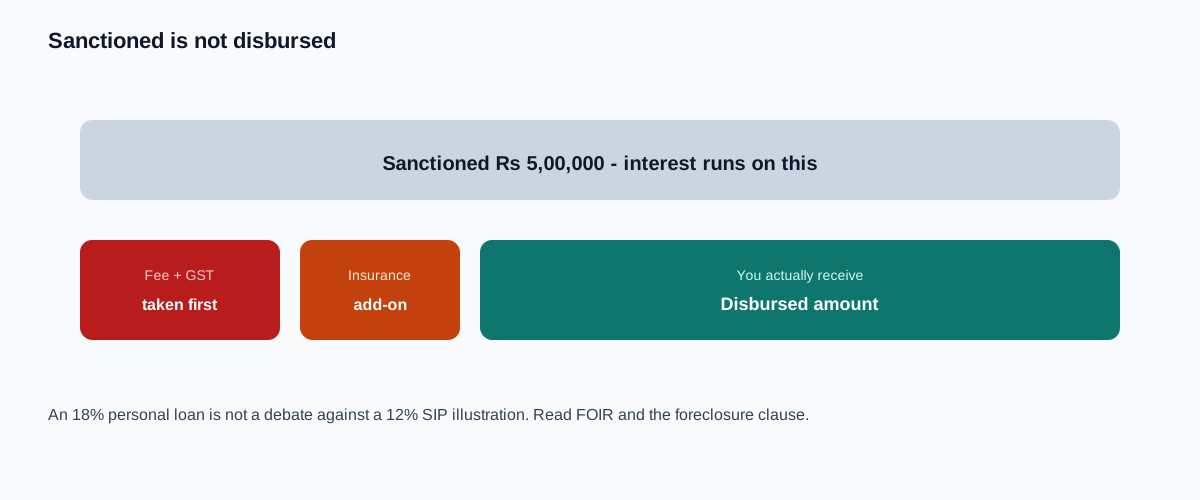
The calculator models interest and principal. Real disbursal often deducts a processing fee (a percentage of the loan, plus GST), and some offers add stamp duty, documentation charges, or optional credit-life insurance. If ₹5 lakh is sanctioned and 2% plus GST is cut at source, you may receive closer to ₹4.88 lakh while still paying EMI on ₹5 lakh. The honest comparison is: cash in hand versus total you will repay. Add those fees mentally (or add them to principal if they are financed) before you decide the loan is “only 12%.”

Bounce charges, late-payment fees, and cheque-swap fees are not in the schedule either. One missed EMI can cost more than a month of interest and can dent the score you will need for the next loan. Build a one-month EMI buffer in a savings account or a short FD before the first debit date.

What affects the rate you are offered

Two people can see the same “10.5% onwards” banner and receive very different sanctions. Lenders price a personal loan off your credit file, income stability, and how much of your pay is already pledged to EMIs.

  • Credit score: A clean file in the 750+ range is where the better advertised rates usually live. A thin file or recent enquiries can push you into a higher band even if you have never defaulted.
  • Income and FOIR: Banks often like total EMIs (old plus new) to stay near 40–50% of net monthly income. A second car loan or a maxed-out card can shrink the personal loan they will give you, even if the calculator EMI looks small.
  • Employer or business profile: Salaried staff at large, well-known employers often get a tighter spread than self-employed applicants with lumpy receipts. That is underwriting, not a moral judgement.
  • Amount and tenure: Very small tickets can be priced like consumer loans. Very long tenures raise the lender’s risk window. Neither is a reason to borrow more than you need.

Multiple applications in a short window create hard enquiries. Compare offers, but avoid spraying the same form to ten apps in two days. Check your report, pick two or three lenders, and apply with numbers you already tested here.

Indicative personal loan rates (major lenders)

Rate cards move with funding costs and each lender’s risk appetite. Treat the table as a starting band, then type the offer on your sanction letter into the slider:

Bank/NBFCInterest RateMax LoanMax Tenure
HDFC Bank10.50–21%₹40 Lakh5 Years
ICICI Bank10.75–19%₹50 Lakh6 Years
SBI11–15%₹20 Lakh7 Years
Axis Bank10.49–22%₹40 Lakh5 Years
Bajaj Finserv13–30%₹35 Lakh8 Years

* Rates are indicative and change with credit score, income, and lender policy. Verify current offers before applying. growwithsip is not affiliated with these institutions.

Prepayment, foreclosure, and why year one matters

Because interest is front-loaded, a prepayment that cuts principal in the first half of the tenure does more work than the same payment near the end. Ask three questions before you sign: is part-prepayment allowed, is there a lock-in (for example no foreclosure in the first 12 months), and what percentage of outstanding principal is the fee, including GST? A lender with a slightly higher rate and zero foreclosure fee can beat a “cheaper” rate if you know a bonus is coming in eight months.

When you prepay, ask the lender to reduce tenure rather than EMI if your goal is to kill interest faster and your monthly cash flow can still bear the current EMI. If cash flow is tight, reducing EMI is the safer operational choice. Re-run this calculator with the new outstanding and remaining years so you are not guessing.

Personal loan vs other ways to raise money

An unsecured personal loan is a tool, not a default. A home-loan top-up, where you already have a mortgage, is often cheaper because it is secured. A gold loan can be faster and cheaper if you have jewellery you are willing to pledge for a short period. Credit-card EMI and revolving card balances are usually the expensive option once the promotional window ends. Breaking a long-term SIP or an FD to avoid 14% interest can be rational for a true emergency; it is a poor way to fund a holiday.

OptionTypical rateBest for
Personal loan~10.5–24%Unsecured needs, medical, travel, consolidation
Home loan / top-up~8–10%Large secured needs; model EMI on the EMI calculator
Credit card EMI~14–45%Short purchases; usually costlier over a year or more

If the expense can wait, price a savings plan in the goal planner and compare that monthly SIP with the EMI you would have paid. Interest you do not borrow is return you do not have to earn elsewhere. If the alternative is parking surplus in a deposit instead of borrowing, the SIP vs FD guide and the FD calculator help you see the opportunity cost in the other direction.

When a personal loan is a reasonable fit

Medical bills, a time-sensitive family event, consolidating 40% card debt into a cheaper reducing-balance loan, or bridging a documented gap until a known inflow arrives — these are the cases where an unsecured loan can be the least-bad option. The test is simple: you can name the purpose, you can pay the EMI without raiding the emergency fund every month, and you have a date by which the loan should be gone.

Lifestyle upgrades, market speculation, and “the app pre-approved me” are weak reasons. A personal loan EMI that sits on top of rent, school fees, and an existing car loan is how FOIR quietly crosses 50% and the next genuine emergency has no room.

Common mistakes

  • Choosing the longest tenure to minimise EMI without looking at total interest.
  • Comparing lenders on rate alone and ignoring processing fees and foreclosure charges.
  • Applying to many lenders at once and denting the score with stacked enquiries.
  • Borrowing the maximum sanction instead of the amount the purpose requires.
  • Skipping the reducing-balance table and being surprised that year-one EMIs barely cut principal.
  • Using a personal loan to invest in equity or crypto — the loan rate is a hurdle the investment must beat after tax, every year, without fail.

Methodology note

Results use the standard EMI formula above with monthly reducing balance. Day-count conventions, the exact disbursal date, and whether the first month is a broken period can make a bank’s schedule differ by a small amount from this estimate. Insurance premia, GST on fees, and penal interest are excluded. Treat every figure as educational. Confirm the final amortisation with the lender’s key fact statement. growwithsip is not a bank, NBFC, or SEBI-registered adviser, and this page is not an offer to lend.

Frequently Asked Questions

Related Calculators