
PPF is the one product on this site where people trust the default rate as if it were a law of physics. It is not. The Department of Economic Affairs notifies a rate that can change every quarter. The PPF calculator still compounds at one annual rate for the whole tenure, deposit-then-interest each year. That is honest about the maths and dishonest if you think it is a forecast of 15 years of notifications.


What the engine does
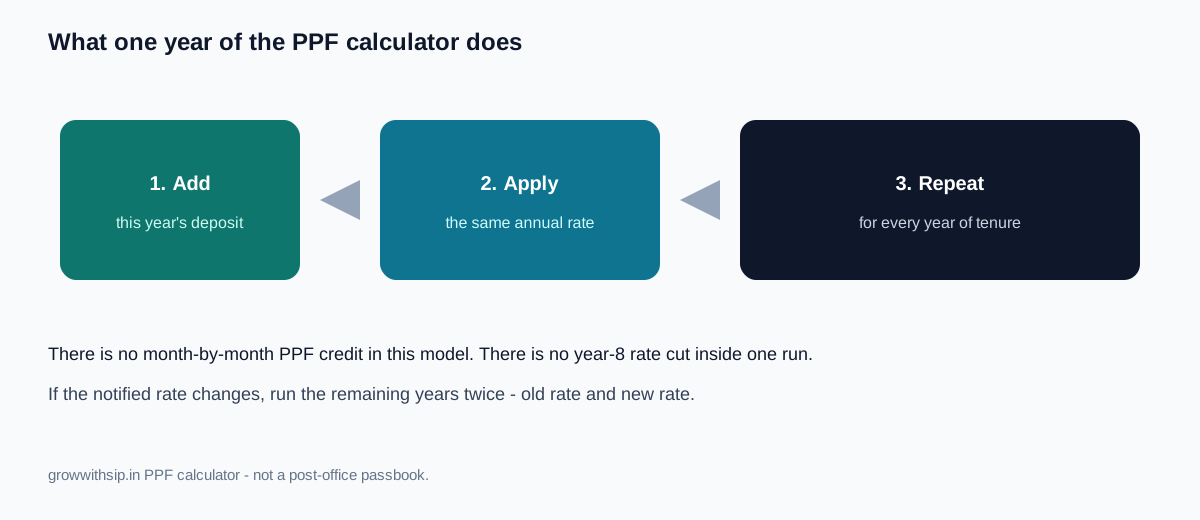
Each year it adds your contribution (capped in the UI the way the scheme caps annual deposits), then applies the annual rate to the new balance. There is no monthly PPF credit in this model. There is no partial-year pro-rata. If you deposit on 31 March versus 5 April in real life, the post office cares; this worksheet does not. I built it that way so the formula on the page matches the loop in code, not so it replaces a passbook.

When the rate changes
Suppose you have nine years left and the rate is cut. The calculator cannot apply 7.1% for the years already gone and 6.8% for the rest in one run. Run two full illustrations: remaining years at the old rate, remaining years at the new rate. The true account will sit between them if future notifications bounce. That band is the useful output.
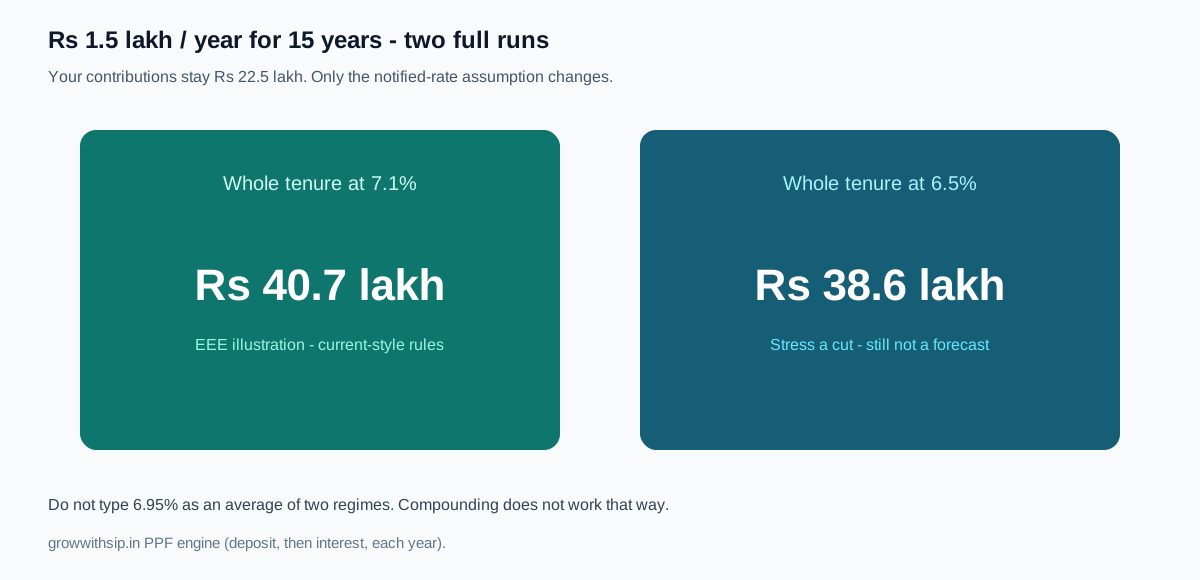
Do not “average” 7.1 and 6.8 and type 6.95 unless you understand you are inventing a third policy path. Averaging rates is not how compounding works across regimes.
A worked band: ₹1.5 lakh a year for 15 years
If the whole ₹1.5 lakh 80C room went to PPF for 15 years, your own money is ₹22.5 lakh. At a 7.1% notified-style rate the engine grows that to about ₹40.7 lakh. At 6.5% for the whole 15 years it is about ₹38.6 lakh. Under current EEE-style rules the maturity is illustrated as tax-free confirm the law when you file. The ₹2 lakh gap is the price of a weaker notification, not a reason to invent 6.8% as a fake average.

Type the rate from your latest statement or from the official notification, not from a “best PPF rate” blog table that mixed tenures. When a new circular is issued, I update the default when I review the calculator. You should still overwrite it.
80C and the rate
A lower notified rate does not change how much tax 80C saves this year. It changes how painful it is to lock money for 15 years. If EPF already fills most of ₹1.5 lakh, leftover 80C may not need more PPF at a weak rate. ELSS is the other 80C sleeve; it is not a substitute for PPF’s guarantee. ELSS vs PPF is the product fork; this page is only the rate fork.
After 80C is full, some people still look at NPS. That is 80CCD(1B), with its own lock-in. Do not stuff PPF only because a colleague did, if cash for the next 15 years is already tight.
What I will not scrape
I will not auto-update the default from a third-party “current PPF rate” widget. Those widgets lag, or they show a bank’s own small-savings page that is not your account. If the paragraph on the PPF page and your passbook disagree, the passbook wins.
growwithsip is not the Post Office. Extension rules, loan against PPF, and premature closure penalties are outside the compounding loop. Use official scheme rules for those — India Post’s PPF page and the DEA small-savings notifications for the current notified rate. Rules and rates can change. Check the latest notification or official guidance before making a financial decision. This page is a compounding worksheet, not a Post Office passbook.